

The Market: Giants on Every Side
Before Dell was online, PC's on the internet belonged to IBM and Sony. Even Gateway, cow-spotted boxes and all, was ahead of its time and a real threat for a while.
Then came the big boxes: Circuit City, CompUSA, Computer City, Micro Center and Best Buy - one of which opened down the block from us and was offered a $4 million tax break because it made the mayor look good.
We competed against all of them. Most of them are gone. We stayed afloat through innovation, not deep pockets, and we did it without ever carrying debt.
The Model: Simple Stores, Central Brain
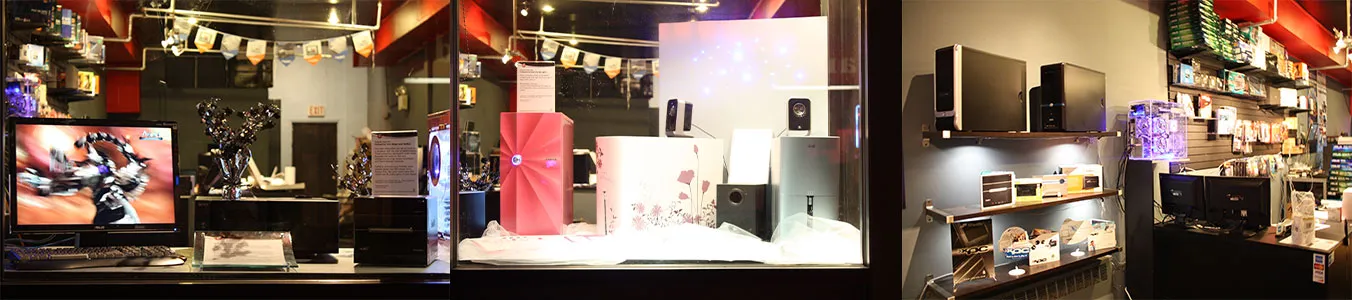
Every one of our stores opened cash-flow positive. The heavy infrastructure stayed central, and most stores were 10 to 15 minutes apart, so anything beyond the basics was a short drive away.
The real balancing act was staff. A store is only as good as the people in it, so every system was simplified and standardized until anyone could run it. If a job went beyond that, it was a 15-minute trip, not a crisis. The business was far more creative than technical.
What It Means When You Hire a Marketer
That's why we don't measure marketing by ROAS alone. Real marketing is the foundation that keeps a company healthy as it grows - building equity, not chasing a quick return. It means knowing your loss leaders, knowing what keeps the lights on, and knowing which bets are worth taking, because every bet costs real money. Any business owner knows a dollar in hand is worth more than a future invoice. We learned that the hard way, and we market like it.
None of our problems were solved by buying more ads. They were solved by building things that kept working after the spending stopped: trust, systems, reputation, and the discipline to say no. That's what we build for clients now. Not just marketing - equity that performs after the spend stops.